

14 Feb Ann Pfisterer helped take Africa University from dream to reality
Byline: By Tim Tanton
BOWLING GREEN, Ky—For Ann Rader Pfisterer, leading the campaign to launch Africa University’s endowment fund would draw on all of her experience as a fundraiser and trailblazing leader in The United Methodist Church.

Helping launch Africa University was “one of the joys of my life,” says Ann Pfisterer, pictured with her Yorkie, Bell.
The year was 1988, and the denomination’s General Conference had approved the proposal for creating Africa University in Mutare, Zimbabwe. Almost a century earlier, in 1898, Methodist Bishop John Hartzell had gazed down into the valley in Old Mutare and envisioned students from all over the continent attending school there. Now, his vision was taking form.
“I just was so thrilled with the idea of what the church was going to undertake,” Pfisterer recalls. “I recognized that it was what many others said, it was the missional opportunity of our generation.”
Now 99, she remembers those early days of selling the vision for Africa University while it was still just a dream. “From a dream to reality – and that’s the way we spoke about it,” she says.
By then, she had honed her fundraising skills as a staff person in the Office of Finance and Field Service at the General Board of Global Ministries. Since 1985, she had assisted congregations and annual conferences with fundraising for a wide range of needs, such as building maintenance, pastors’ pensions and missionary work.
In addition to leading multimillion-dollar campaigns, she had overcome obstacles as a woman leader working in spaces traditionally dominated by men. Before joining the staff, she had served four years as president of Global Ministries’ National Division — the first woman elected to that position, she recalls.
Prior to that, she had been a board member of the Women’s Division, and she continued to be heavily involved in United Methodist Women. She understood local churches, having worked in volunteer roles, such as spiritual growth director, at the congregations where her husband, the Rev. Fred Pfisterer, was pastor. At the time, the couple was living in Henderson, Kentucky.
“I knew the church on every level,” says Pfisterer, who has a business administration degree from Elon College. “… It was my life; that was what I did.”
General Conference had approved a $20 million budget for Africa University for the 1988-92 period, but $10 million of that would have to be raised, so the delegates created a World Service Special — a church fund to receive donations. Shortly after the effort began, Pfisterer’s supervisor asked her to take the lead in establishing the permanent endowment scholarship fund for the school. She was named campaign director and project manager.
Her assignment entailed writing a case statement for the university, forming a committee of directors and finding potential donors. Working out of an office in Nashville, Tennessee, she spent much of the next four years on the road, talking to local congregations, groups, church leaders and business people.
She worked closely with Angella Current Felder at the General Board of Higher Education and Ministry in Nashville, Tennessee. “Her heart was with that university,” Pfisterer says. “She has been a real blessing to that undertaking.”
Current Felder, who has since retired, also praises Pfisterer: “She was highly organized and detailed and was very knowledgeable. We worked together well.”
While the vision for Africa University had strong support in the church, there were naysayers, including one church leader who said that supporting the effort would be like pouring money down a rathole.
“Let me tell you, it initially was a hard sell,” Pfisterer says.
“You had two groups of people that you interacted with,” Current Felder recalls. “People who said it was never going to happen, it couldn’t be, and people who believed totally in the vision. There were very few people in between.”
 The U.S. economy was struggling, and some of the top church leaders that Pfisterer approached were unenthusiastic about sharing donor names. She finally turned to General Conference delegates who had supported the proposal, and she was able to build a list of potential donors.
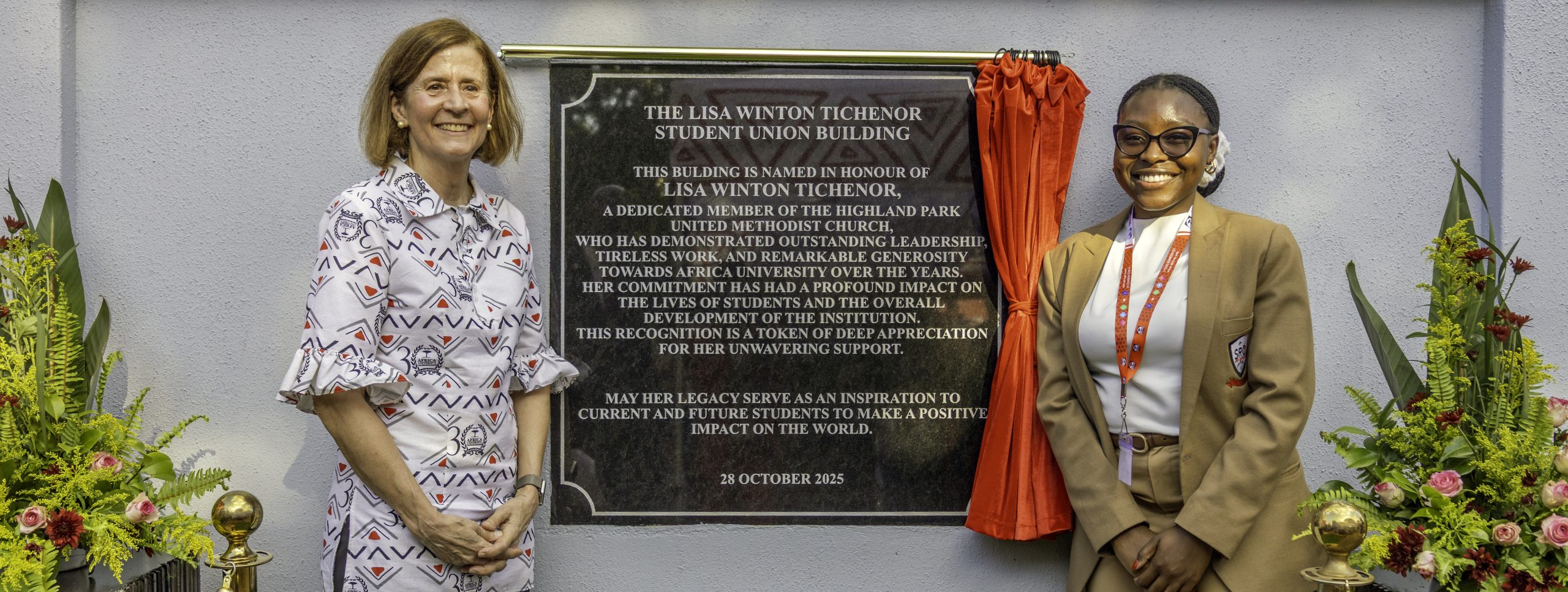
She recruited a committee of distinguished people in business, the church and public life, chaired by Bishop Roy Nichols, with NFL Hall of Fame quarterback Warren Moon as honorary chair. The committee included Lisa Tichenor, a North Texas laywoman who went on to become a leading advocate for the school for three decades and served on its board of development.
Then 31, Tichenor says she was “by far the youngest person on the committee” and learned a lot from Pfisterer. “I really found her to be an encouraging presence,” she says. Pfisterer shepherded the group with the conviction that the university was going to happen.
“She ensured that Africa University got off on a strong start,” Tichenor says. “She provided the strength of leadership to really begin the work of the university and not lose time trying to figure out what to do.” She got everyone organized and energized, had the plan and assignments ready, and then supported the committee throughout the campaign, she says.
Pfisterer helped organize the campaign launch at St. Luke’s United Methodist Church in Houston, Texas, in 1991, which raised more than $155,000 in pledges. By the end of that year, United Methodists had contributed more than $6 million in apportioned funds for buildings and grounds and $2.3 million in World Service Special gift funds to endow scholarships for students, Current Felder says.
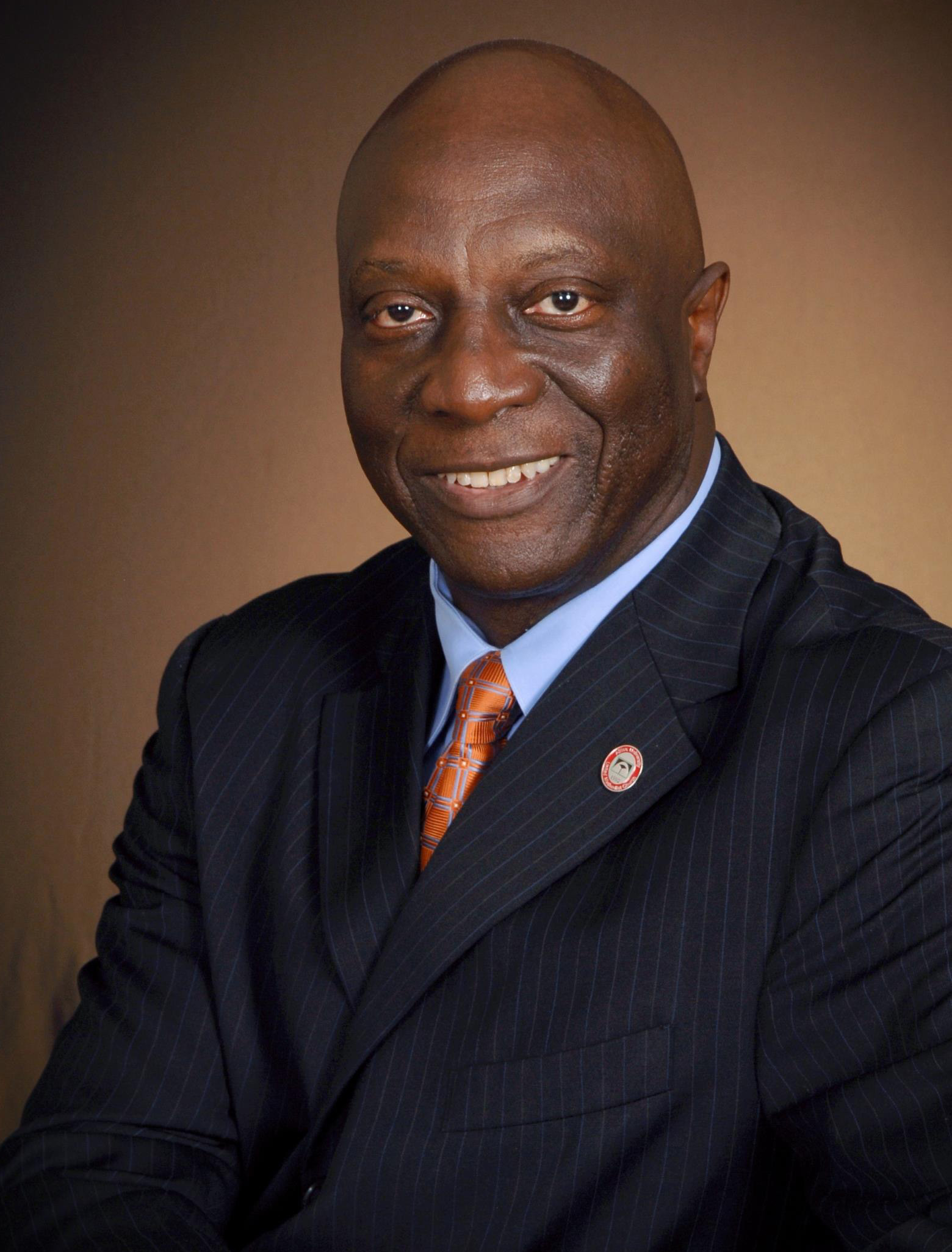 When a cancer diagnosis forced Pfisterer to take several weeks off in late 1991, she continued to stay in touch with the campaign and was back to work in early 1992. Later that year, the project transitioned from the fundraising stage to the development stage and passed on to James Salley, who today serves as president and chief executive officer of Africa University (Tennessee) Inc. “He has done a fantastic job,” Pfisterer says of Salley. “I so admire him.”
Salley, who began his role Sept. 1, 1992, says Pfisterer’s work “was the genesis for starting the endowment.”
“I am literally standing on the shoulders of Ann Pfisterer,” he says. “She paved the way for all of us.”
Despite her work, Pfisterer never visited the campus. Her general secretary, the Rev. Randolph Nugent, told her the board would pay for her travel, she says. “And I said, ‘Randy, I don’t want to cost the board that much.’ I said, ‘It’s a dream … I know it’s going to happen, but I just don’t want to spend that kind of money when I think it could be used in other ways.’
“So I never got there. But I felt like I’d been. I knew so many of the people.”
She also contributed to the university herself and continues to do so.
Asked what she felt when the school opened, she replies: “Just joy, joy, joy.”
Classes began in March 1992, followed by the official opening in April 1994. Enrollment has grown from 40 students initially to 2,800 today, and the school has an endowment of $140 million with no debt, Salley said.
After Africa University’s launch, Pfisterer went on to lead other campaigns for the church, finally retiring in 1994. When asked about her longevity, she laughs and says she doesn’t know how she got to be 99.
Says Salley: “To still have her around and for me to be able to talk to her … and have her at 99 be able to remember and articulate the journey as it has been with Africa University, it’s just a thrill for me.”
In an interview, holding her Yorkie, Bell, on her lap, Pfisterer remembers that journey with clear fondness.
“It was one of the joys of my life to be able to work on what I knew to be — what I felt to be out of my experience with the Board of Global Ministries — something that would challenge the church, and would call for sacrificial giving,” she says, “and that we could bring the understanding that Methodism brings to the Christian experience, we could bring that to the continent of Africa. I stand amazed at how things worked out together to do that.”
More than 13,000 students have graduated from Africa University over the past three decades.
Pfisterer is pleased that so many graduates have returned to their home countries to share their knowledge and leadership. And she is proud of her denomination for making the dream a reality.
“It’s just a tremendous story of when people work together what we can accomplish.”
Sorry, the comment form is closed at this time.